
Content Supervision
CLINIC TRN doctor2
clinic ten doctor
CLINIC TRN doctor2
clinic ten doctor
What is pyelonephritis?
Pyelonephritis is a condition in which bacteria travel up to the kidneys through the urethra (the passage through which urine passes) during cystitis, causing kidney infection and inflammation. Cystitis often occurs first, but it can also occur without cystitis.
Pyelonephritis is more likely to occur in young women. This is because the length of the urethra from the outlet of urine to the bladder is shorter in women than in men, making it easier for bacteria to enter the bladder.
Holding in your pee for a long time can cause bacteria that would normally be flushed out with urine to remain, leading to infection. Overwork and stress also make you more susceptible to bacterial infection. For women, sexual intercourse and menstruation pose risks, so caution is advised.
Symptoms and characteristics of pyelonephritis
Pyelonephritis is characterized by severe symptoms throughout the body. Symptoms include fever (sometimes exceeding 38°C), chills, shivering, back and waist pain, nausea, and vomiting.
Furthermore, because pyelonephritis is triggered by cystitis, symptoms commonly associated with cystitis, such as pain when urinating (painful urination), frequent urination, and a feeling of incomplete urination, are also common.
Treatment and precautions for pyelonephritis
Since the cause is a bacterial infection, you will need to take antibiotics. Visit a hospital and get a prescription from your doctor. Antibiotics are often effective, so recovery is usually quick. However, even if your symptoms improve, do not stop taking the prescribed antibiotics at your own discretion, and be sure to finish the prescribed amount.
It is important to take all of your antibiotics. This is because even if your symptoms improve, bacteria may still remain, and if you stop taking them, the remaining bacteria may multiply again.
It’s also a good idea to drink plenty of fluids and urinate a lot, as urination can help flush out bacteria.
Is pyelonephritis contagious to other people?
Pyelonephritis is caused by a bacterial infection, but it is not contagious.
Summary
- Pyelonephritis often occurs as a result of cystitis.
- It occurs more often in young women.
- You should be careful about holding in your pee for long periods of time, stress, and sexual activity.
- Symptoms include fever and generalized symptoms.
- Symptoms of cystitis such as pain during urination, frequent urination, and a feeling of incomplete urination may also occur.
- Visit a doctor and get a prescription for antibiotics, and take them all.
If you are suffering from pyelonephritis, please visit our hospital.
FLOW
Consultation Process
Reservation & Online Medical Questionnaire

Reservation & Online Medical Questionnaire
Our clinic operates on a complete online reservation system. Please make your reservation using the form below.
Visit & Consultation

Visit & Consultation
Unlike typical clinics where patients enter the doctor’s room, we have reversed this concept—patients reserve a room slot and are guided directly to the consultation room, where the doctor will come to you. There is no need to fill out questionnaires or wait in a waiting room.
What to Bring
credit card
Consultation Payment

Consultation Payment
Since payment is made in advance before your consultation, you can receive the doctor’s examination with peace of mind about the cost.
After-Care Follow-up
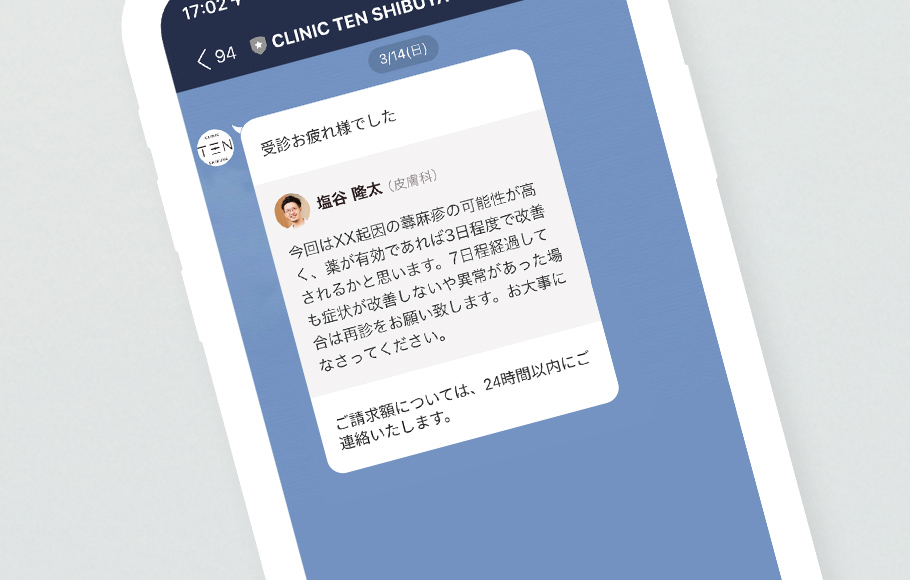
After-Care Follow-up
After your consultation, we will send you a summary of your visit with comments from the doctor via MAIL or SNS. You can review your diagnosis, the doctor’s advice, and situations requiring a follow-up visit at any time.
PAYMENT
Payment Methods
Our clinic is completely cashless and accepts only credit card payments.

More Information
- Gupta K, Hooton TM, Naber KG, et al. International clinical practice guidelines for the treatment of acute uncomplicated cystitis and pyelonephritis in women: A 2010 update by the Infectious Diseases Society of America and the European Society for Microbiology and Infectious Diseases. Clin Infect Dis. 2011;52(5):e103-e120. doi:10.1093/cid/ciq257
- Do You Know About Pyelonephritis? | About the Hospital and Departments | Kyorin University Hospital
- Uncomplicated Urinary Tract Infection | New England Journal of Medicine